Insights
Why technology stalls in insurance — and how to fix it
Patterns from real assessments and partnership work. No theory — just what we see repeated across every technology company trying to break into insurance.
Featured
Research Paper: Is the Workplace Getting Safer
This report argues that the insurance market has been reading outcome data as though it were a scoreboard
Read insight →
Is the Workplace Getting Safer?
Buy Now Research report · Summary In 2025, road deaths in Great Britain fell by 4 per cent while the number of people killed or seriously injured rose by
Read insight →Load Volatility, Not Load Level
511,000 UK workers report a work-related musculoskeletal disorder. These are not accidents. A shoulder fails because of a load pattern sustained over months — and that pattern already sits in rostering systems.
Read insight →
The Safety Data You Already Hold
Fleet telematics, digital checklists and warehouse vision were bought for fuel, compliance and throughput. The resulting data estate describes work as actually performed — the one thing insurance has spent a century approximating.
Read insight →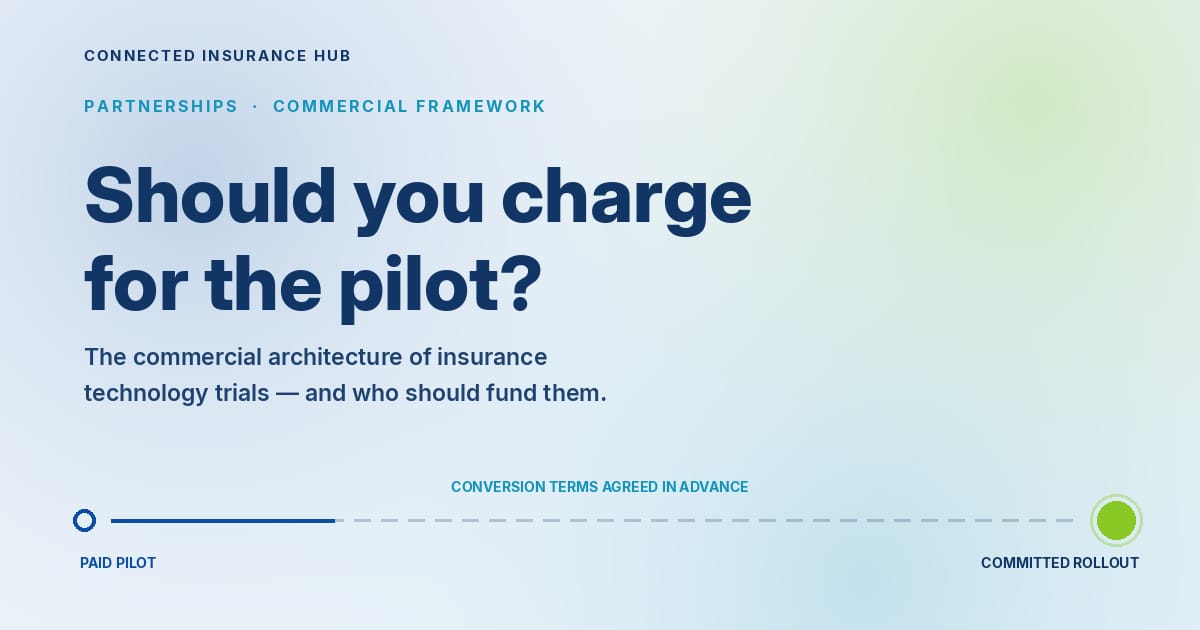
Should You Charge for the Pilot? The Commercial Architecture of Insurance Technology Trials
Read insight →
The Five Gates
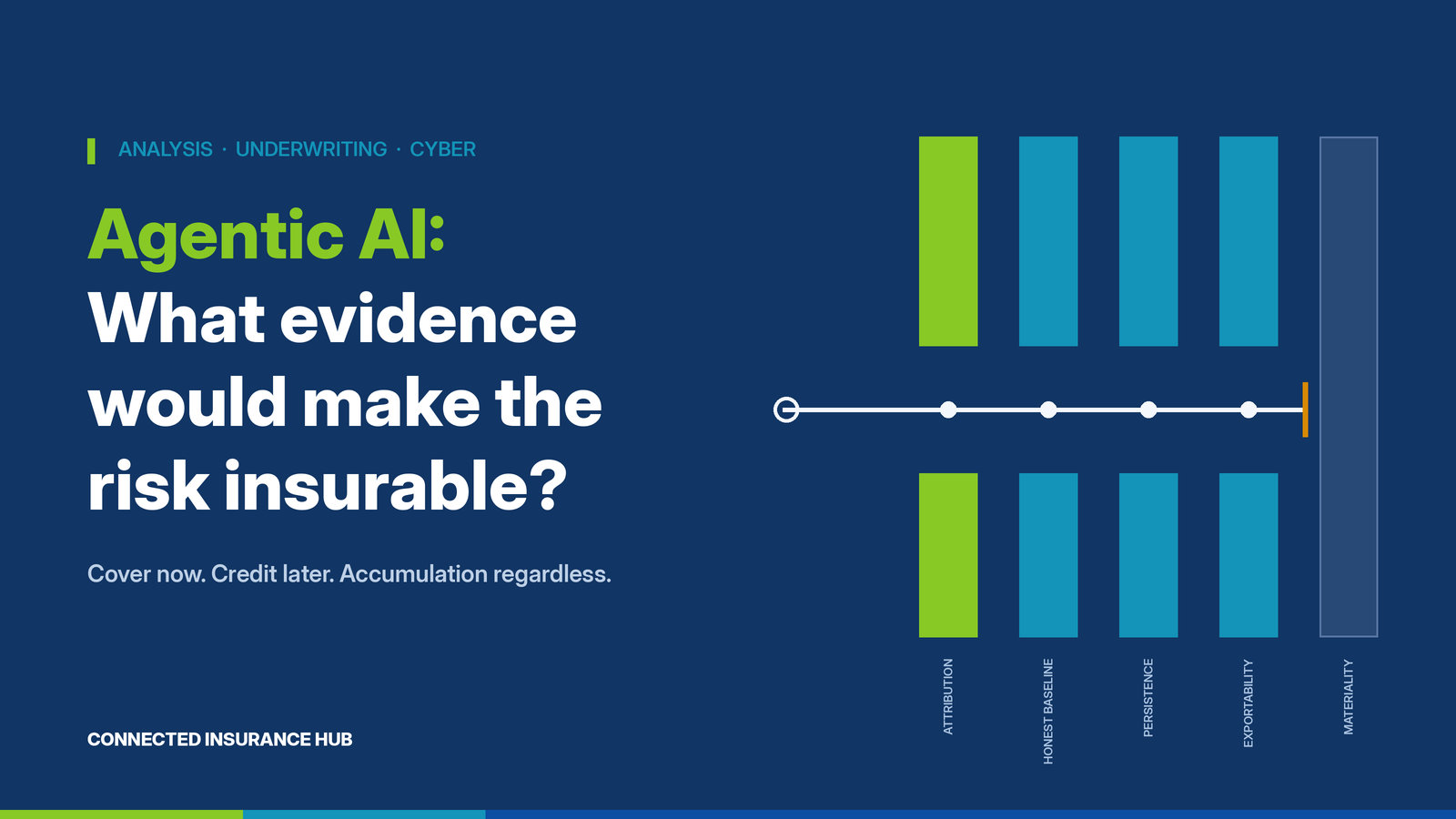
What separates a number that impresses from evidence an underwriter can price. Any vendor can produce a percentage. “Our technology cut claims by twenty per cent” is a
Read insight →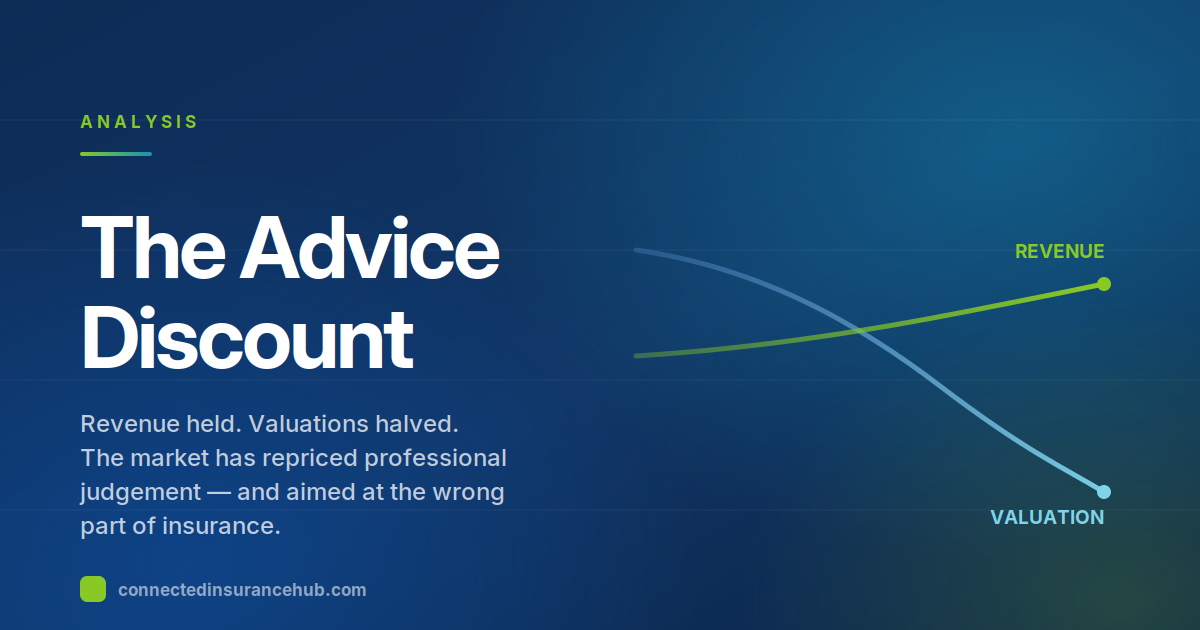
The Advice Discount
Equity markets have started to price artificial intelligence disruption directly into the valuations of firms that sell professional judgement. Insurance broking has had its first repricing. It was
Read insight →
From Transfer to Control
How technology companies, investors, and the insurance market navigate the most significant structural shift in a generation
Read insight →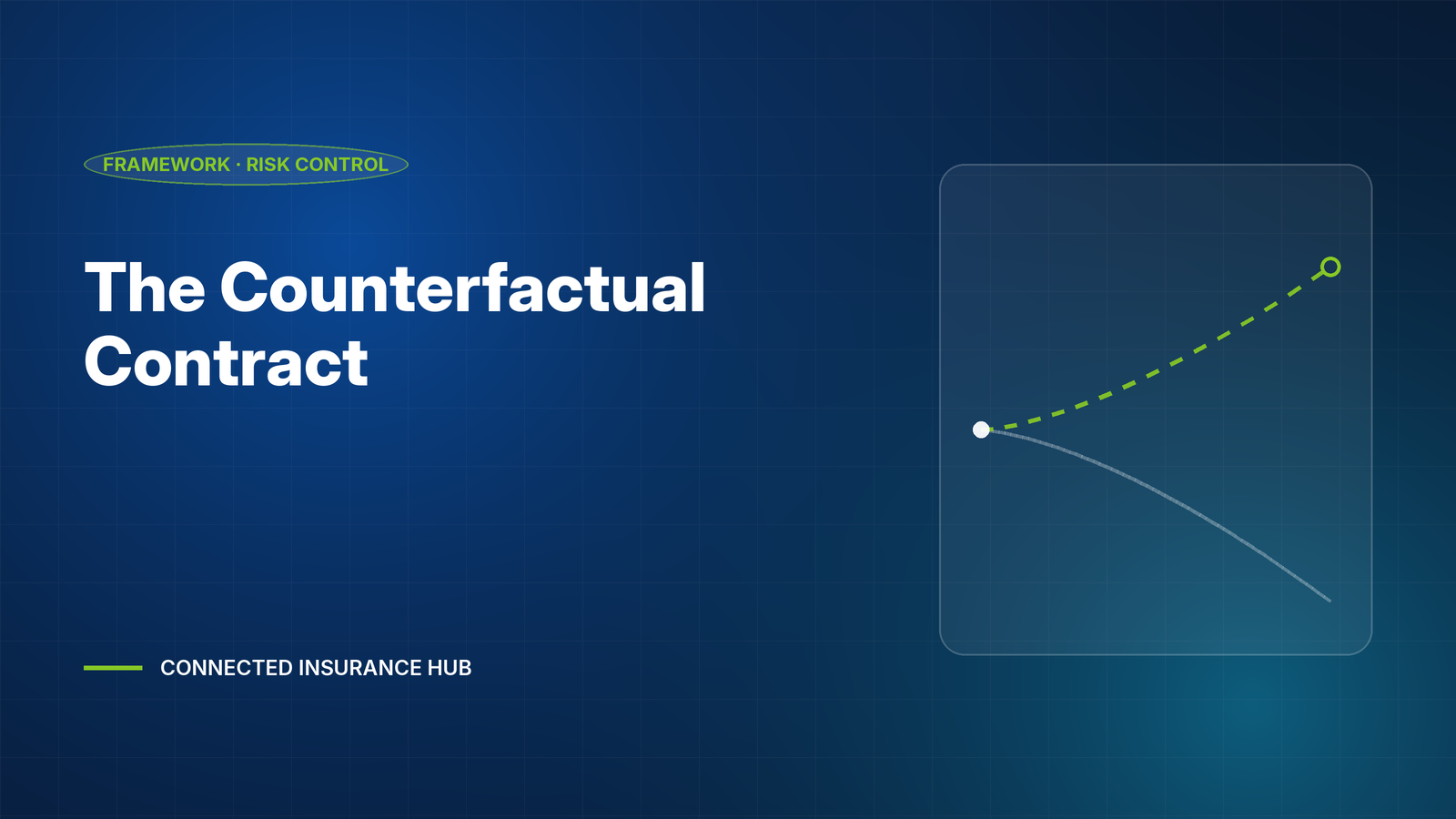
The Counterfactual Contract
How risk technology can be paid directly out of the losses it prevents — the actuarial conditions that make a "counterfactual contract" work, and where it breaks
Read insight →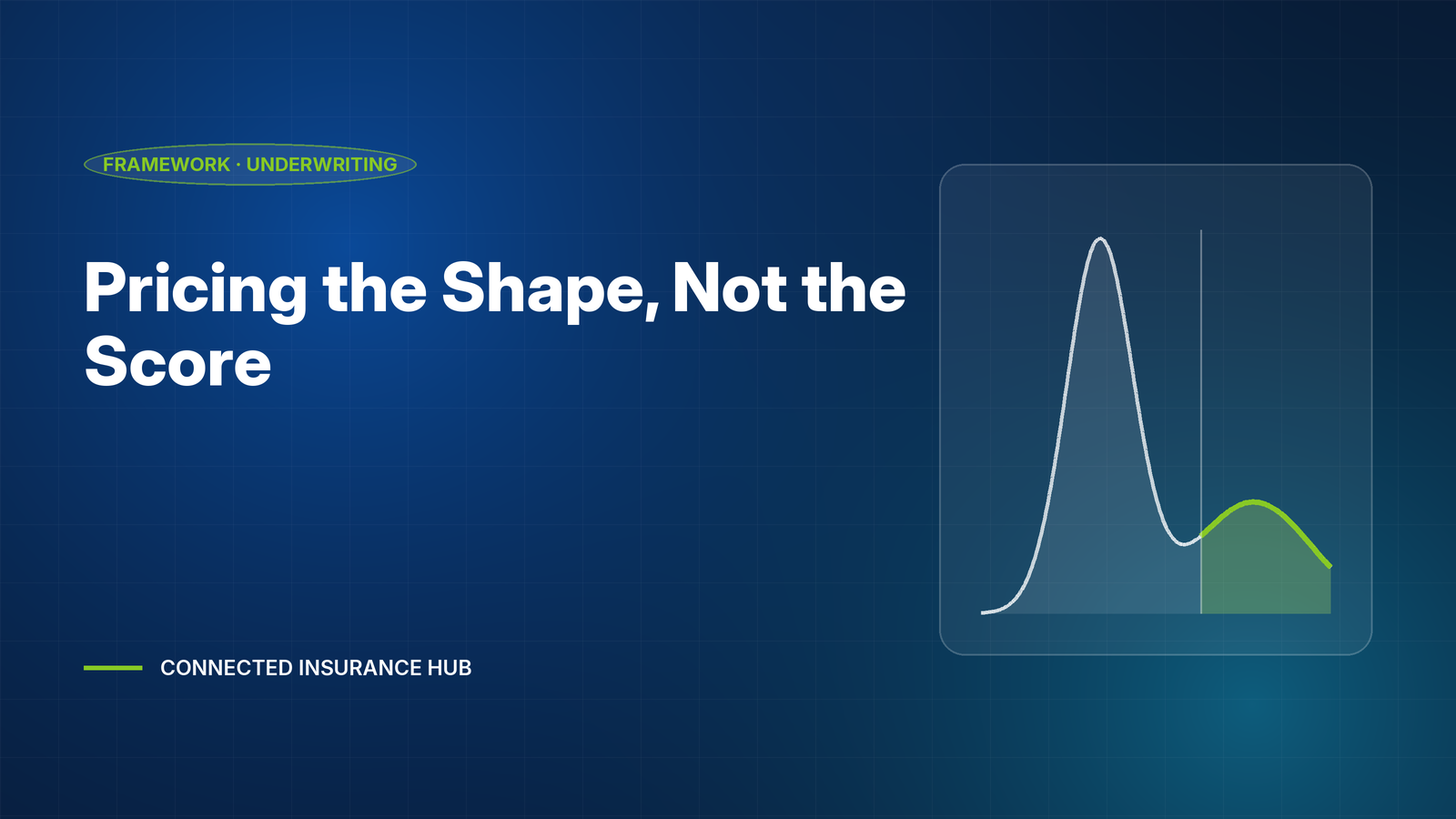
Pricing the Shape, Not the Score: What Underwriters Should Extract from Risk-Technology Data
Read insight →The Benefits Bridge: What P&C Can Borrow from Health Insurance — and the Data It Should Refuse to Hold
Strategy · Partnerships · Casualty · 11 min read Health insurance solved sustained engagement with prevention before P&C did. The lesson is transferable. The data appetite is not. The
Read insight →
Part 4: Working With the Technology, Not Just the Vendor: How Brokers and Insurers Should Approach Risk Technology Partnerships
Read insight →
Part 3: Backing the Category, Not Just the Company: How Investors Should Evaluate New Risk Technology
Read insight →
Part 2: Building the Case: How to Answer Why This, Why Us, and Why Now
Read insight →
Part 1: The Three Questions Behind Every Stalled Insurance Pitch
Analysis · Distribution · Part 1 of 4 A technology vendor pitching into insurance distribution is being asked three different questions by three different audiences. Most pitches answer one of
Read insight →
The Prevention-to-Pricing Gap
Analysis · Risk Control Prevention technology now demonstrably lowers the frequency and severity of loss. Yet most propositions never convert that capability into the one currency an underwriter recognises:
Read insight →
Digital Twins in Commercial Property: From Buzzword to Underwriting Input
The digital twin concept has accumulated extraordinary momentum. McKinsey estimates global digital twin investments will exceed $48 billion by 2026, with 70% of C-suite technology executives at
Read insight →
The Parametric Paradox: Why Removing Claims Friction Can Break Product Economics
Read insight →The Missing Layer in Loss Control: Why Technology Alone Doesn’t Reduce Claims
Read insight →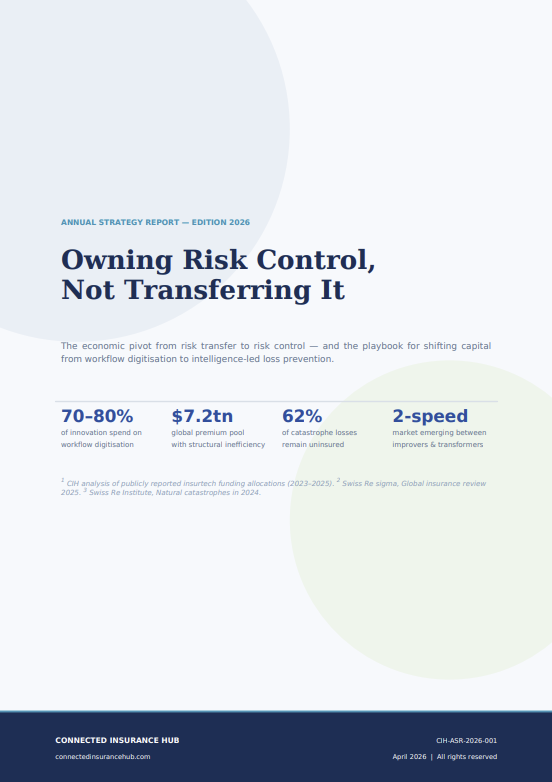
Annual Strategy Report -2026
The strategic edge now sits at the intersection of decisioning, prevention, and workflow control. That is where margin becomes more defensible, loss becomes more manageable, and differentiation becomes harder to commoditise.
Read insight →The Loss Control Imperative: Why the Winners in Insurance Will Be the Ones Who Reduce Risk, Not Just Price It
Read insight →Why Your First Insurance Client Should Be a Broker
Read insight →The Compliance Conversation You're Not Having Early Enough
Every technology company we assess has a compliance gap. Not because they are negligent — most are GDPR-aware and take data security seriously — but because they have no
Read insight →The Data Question Every Underwriter Should Ask a Technology Partner
Every technology company pitching to an insurer leads with the same claim: "Our data will improve your underwriting." The claim may be true. But in our
Read insight →How to Evaluate a Technology Partner Without Getting Stuck in Procurement
If you work in insurance innovation, partnerships, or digital transformation, you've lived this story. You find a technology company with a genuinely compelling product. The underwriting
Read insight →From Pilot to Production: Why 90% of Insurance Technology Partnerships Stall After the Proof of Concept
The insurance industry has a pilot problem. Not a shortage of pilots — there are more technology proofs of concept running inside insurers and brokers than at any point
Read insight →What Insurers Actually Mean When They Say "We're Interested"
If you've spent any time selling technology into insurance, you'll recognise the experience. The meeting goes well. The underwriter nods. The innovation director calls
Read insight →Build, Buy, or Partner? A Decision Framework for Insurance Technology Strategy
Read insight →The Technology Radar: Ten Technologies Reshaping How Risk Is Understood, Managed, and Insured
Read insight →The Two-Way Partnership Test: What Technology Companies Should Be Asking Insurers and Brokers
Read insight →Beyond the Black Box: When Telematics Becomes an Underwriting Conversation
Read insight →The Insurance Readiness Gap: What We Find Every Time We Assess a Technology Company
Read insight →What Every Insurtech Gets Wrong About Broker Distribution
Ask any insurtech CEO about their go-to-market strategy and you'll hear some variation of the same answer: "We're in discussions with
Read insight →The Pilot Graveyard: Why Most Insurtechs Never Get Past the First Meeting
Getting a meeting with an insurer isn't hard. Most technology companies with a credible product and a reasonable pitch deck can secure a conversation with an
Read insight →No insights match your search.